
Industries · Construction and Civil Works
Contractor management in construction and civil works
A project can have twenty subcontractors, each with its own crew, machinery, and timeline. In NAVA, each project has its work sites, its associated contractors, and the requirements matrix that project calls for.
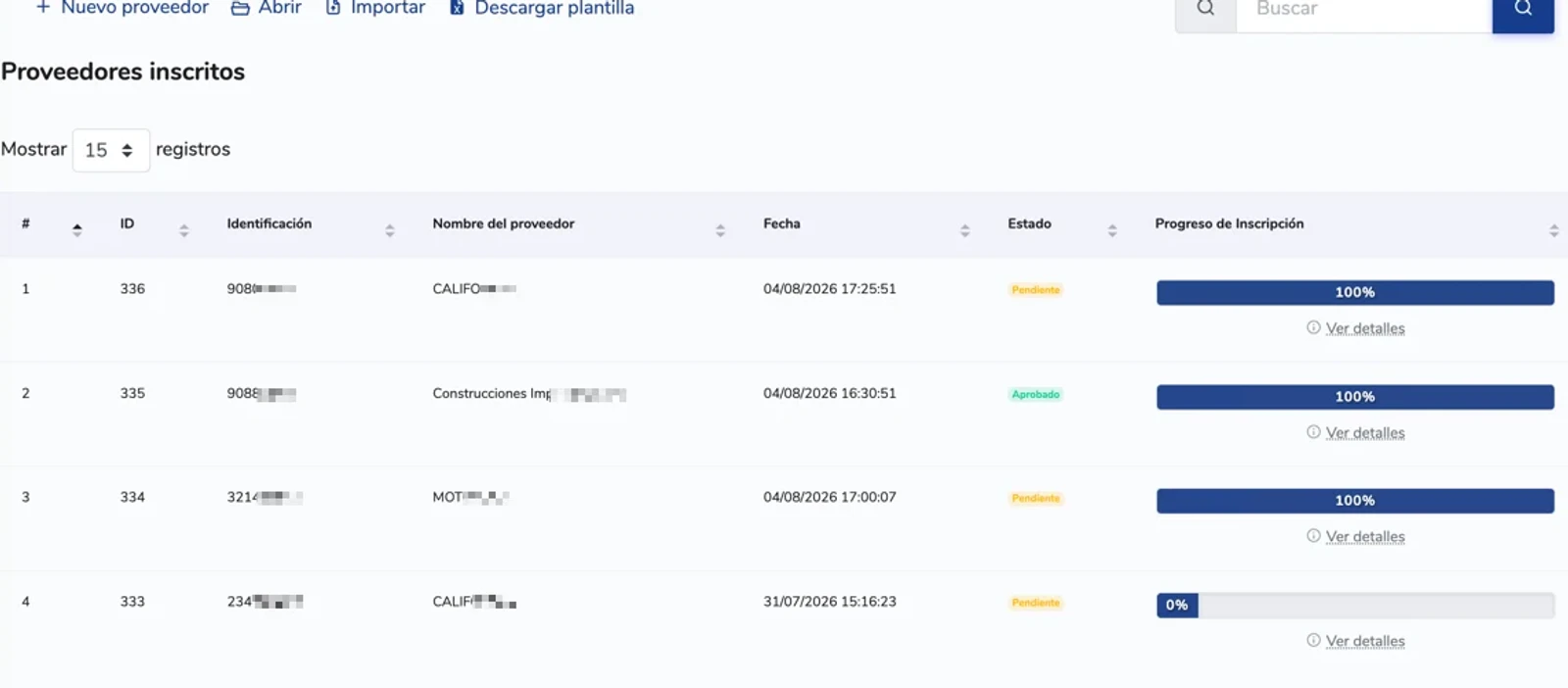
The subcontractor uploads its documents in its own portal and sees what’s missing, what was approved, and what was rejected, with what comment. Your team stops chasing files and starts reviewing them.

Critical moment in construction and civil works
Project kickoff and every crew change
- Who comes in
- Subcontractors by trade, crews, contracted machinery
- Elements under control
- People · vehicles · machinery
- Answer at the gatehouse
- Cleared for entry: yes or no
Context
Why control on a job site is organized by project
A construction company manages projects that start and end. Each project has its schedule, its independent oversight firm, its work fronts, and its list of subcontractors, and the next project may have different ones.
That pace clashes with traditional document control. Prequalification can’t take three months when the project lasts eight, and Monday’s crew isn’t Thursday’s.
In NAVA, the project is an entity: it’s created with its name, its dates, and its work sites, subcontractors are associated with it, and the information is looked up and exported by project.
The problem
What makes subcontractor control hard on a job site
Situations your team will recognize, and what happens today when control depends on a spreadsheet and on the memory of whoever is at the door.
-
The project is temporary, and control has to start fast
An eight-month project can’t absorb three months of prequalification. Document onboarding competes with the schedule, and the schedule always wins.
People are let in first and the documentation is completed later, if there’s time.
-
Many small subcontractors
Companies with minimal administrative structure that send their documentation over WhatsApp, as photos, to whoever asked for it.
Chasing that documentation takes up most of the department’s time, and what does arrive ends up in someone’s inbox.
-
Joint liability
If a subcontractor fails to meet its labor or social security obligations, the hiring company is liable for them.
Evidence of the control exercised stops being an administrative formality and becomes the company’s defense.
-
Crews that change on the fly
The person who came in on Monday isn’t the one coming in on Thursday, and the subcontractor rotates personnel between work fronts or between projects without notice.
Control by company rather than by person protects nothing: the company is prequalified, but whoever came in today may not be.
-
Audits are done by project
When a project is reviewed, that project is what gets reviewed: its contractors, its personnel, its insurance policies, its inductions.
If the information can’t be separated by project, it has to be rebuilt by filtering by hand.
Document requirements matrix
The documents your operation requires
The matrix turns your company’s procedure into rules the system applies: which element each document is required for, under which activity, with what validity period, who approves it, and what gets blocked when it expires.
- Entry The person or vehicle can’t enter while the document is expired or rejected.
- Use The equipment or machinery is disabled from operating.
- Contract It affects the continuity of the relationship with the contractor company.
| Document | Applies to | Blocks | Operational note |
|---|---|---|---|
| Current enrollment with an ARL (Colombia’s occupational risk insurer), with risk class | People | Entry | The risk class for construction is high and must match the actual activity |
| Current enrollment with an EPS (health insurer) and a pension fund | People | Entry | This is where the most noncompliance is found among small subcontractors |
| Valid occupational medical exam | People | Entry | |
| Work-at-heights certificate | People | Entry | Decisive on a job site: it applies more than two meters above floor level |
| Activity certifications | People | Entry | Equipment operation, lifting, confined spaces, depending on the work front |
| Equipment inspection certificate | Machinery | Use | Scaffolding, cranes, hoists |
| SOAT (Colombia’s mandatory vehicle insurance) and technical-mechanical inspection | Vehicles | Use | |
| Performance bond and civil liability insurance policy | Company | Contract | |
| Chamber of commerce certificate and RUT (Colombian tax registration) | Company | Contract | Onboarding requirement |
| Project induction | People | Entry | Renewable per project: the one from the previous project doesn’t count for this one |
Each requirement is configured once with its validity period, its approver, and its review criteria. Entry override is available as an exception, with a named person responsible and a justification.
How it works
Who does what, from onboarding to the gatehouse
Your team manages the relationship, the third party uploads their information, and NAVA applies the rules throughout the cycle. These are the five stages in construction and civil works.
- 01
Your team
Project setup
The project is created with its name, its dates, and its work sites. Everything that happens afterward is associated with that project and can be looked up by it.
- 02
Your team
Subcontractor prequalification
The company is linked to the project and assigned the activities it will perform. Company documents are required once, and their expiration affects the continuity of the contract.
- 03
The subcontractor
Crew upload
It creates its personnel and machinery from its own portal and uploads the files, one at a time or with an Excel template. On the same screen, it sees what’s missing and what was rejected.
- 04
Your team or the NAVA back office
Validation
The reviewer opens the document with the defined dates and criteria and approves, rejects with a comment, or leaves it pending. On the Plus plan, within 24 hours at most.
- 05
Gatehouse
Entry to the work front
The lookup is by ID number, license plate, serial number, or QR code, with the requirements of the work front that person is entering. The answer is cleared or not cleared.
Scenario
Prequalifying a new subcontractor
The structural subcontractor logs in to its portal three days before starting. It sees its twenty-four people and its three pieces of equipment, the status of each document, and the exact comment on what was rejected: one worker’s heights certificate is missing the training hours.
What today takes several back-and-forth emails (and a call asking what was missing) now sits on a single screen. Your team, on the other side, sees prequalification progress by project and knows which work front is ready to start.
- ARL enrollment Valid until Nov 30, 2026approved
- Performance bond Expires in 12 daysexpiring soon
- Heights certificate Comment: training hours missingrejected
- Scaffolding inspection Under review since yesterdayunder review
Results
What changes when control is organized by project
Four concrete changes to day-to-day work in construction and civil works. You can see each one in detail on the page of the solution that carries it out.
-

Prequalification moves forward without chasing anyone
-

Each activity has its own requirements
-
Audits are answered by project
-

Control is by person, not by company
The platform
Which solutions are involved in this industry
NAVA is three solutions on the same platform. This is the role each one plays in an operation like yours.

Projects, subcontractor prequalification, a document requirements matrix by activity type, insurance policy control, and entry lookups.
See NAVA 360 →
Oversight firms, clients, occasional suppliers, and technical visits to the site: self-registration through a link or QR code and host pre-approval.
See NAVA ID →
Training over WhatsApp for crews that rotate between work fronts, with an assessment in the chat and a PDF certificate.
See NAVA Skills →All three share one platform and database and are contracted separately. On job sites, the most common combination is NAVA 360 for subcontractors and NAVA ID for the oversight firm and visits.
Regulatory framework
Applicable regulations and how they translate into documents
NAVA doesn’t provide legal advice or interpret the scope of joint liability: it manages the documents your company uses to show the control it exercised, with a responsible person and a date.
| Framework | What it requires | How it shows up in the document requirements matrix |
|---|---|---|
| Decree 1072 of 2015 | The hiring company’s obligations under its OHS (occupational health and safety) management system (SG-SST) toward third parties who enter its operation | ARL, EPS, and pension enrollments, medical exams, and project induction |
| Resolution 0312 of 2019 | Minimum SG-SST standards by size and risk class | Requirements differentiated by activity type |
| Resolution 4272 of 2021 | Minimum safety requirements for work at heights, more than two meters above floor level | Work-at-heights certificate as an entry-restrictive document |
| The hiring company’s joint liability | Being liable for the subcontractor’s labor and social security obligations | Current enrollments as a restrictive requirement, with evidence of the review and its date |
Frequently asked questions
Questions about third-party control in Construction and Civil Works
Can each project require different documents?
Projects are created with their name, their dates, and their associated contractors, and they group the job so you can look it up and export it separately. What’s required of each person is determined by the activity they’ll perform.
We have small subcontractors who don’t handle paperwork well. Will they be able to use it?
The subcontractor logs in to its own portal and sees exactly which documents are missing, which were approved, and which were rejected, with what comment. Your team stops chasing and starts reviewing what has already come in.
Can we pull the information for a single project for an audit?
Yes. Reports are filtered by the lookup fields, including the project, and exported to Excel with the columns you need.
The crew changes every week. Do we have to prequalify the company again?
No. The company is prequalified once with its contract documents, and each new person is created as one more element, with the documentation required by the activity they’ll perform.
Can the project induction be renewed for each project?
Yes. The induction is configured with its content, its assessment, its validity period, and its restrictive nature, so one project’s induction doesn’t clear anyone for entry to another.
What happens if a subcontractor’s insurance policy expires?
If the document is configured as contract-restrictive, its expiration affects the continuity of the relationship with that company, not just one person’s entry.
Does NAVA need a different setup for each industry?
The document requirements matrix is configured with your company’s requirements, and those requirements change from one industry to the next. The system is the same: what you configure are the documents, validity periods, approvers, and which document blocks what.
Demo
See NAVA with the requirements of your project
We set up a project with your work fronts, your subcontractors, and the documents your oversight firm requires. You leave with a written price proposal.
- Colombian software
- 30-day trial
- OHS validation available
- Support in Spanish