
Industries · Mining
Contractor management in mining
In an operation that never stops, a contractor’s documentation isn’t reviewed just once: it has to be valid on every shift they come in. NAVA calculates expirations, sends alerts with the configured lead time, and blocks entry for anyone who’s no longer up to date.
The lookup at the guard booth works in the middle of the night, on weekends, and on holidays, because it doesn’t depend on anyone confirming anything: the system answers with the status calculated at that moment.

Critical moment in mining
Shift change, at any hour
- Who comes in
- Operations and maintenance contractors, carriers, contracted machinery
- Elements under control
- People · vehicles · machinery
- Answer at the gatehouse
- Cleared for entry: yes or no, 24/7
Context
Control that has to run at the mine’s pace
A mining operation works with contractors on almost every front: drilling, earthmoving, maintenance, material hauling, and camp services. They come in and out on shifts that cover all twenty-four hours.
That raises two questions. What to require of each one, because they don’t all do the same work or have the same risk class. And when to verify it, because at three in the morning there’s no one in the office.
NAVA answers both with the same piece: requirements are assigned by activity and by functions or roles, and the guard booth looks up a status the system has already calculated.
The problem
What makes contractor control hard in a mining operation
Situations your team will recognize, and what happens today when control depends on a spreadsheet and on the memory of whoever is at the door.
-
The operation doesn’t stop
Entry control runs in the middle of the night, on weekends, and on holidays, when the administrative team isn’t there. The gatehouse has to be able to decide on its own, with reliable information.
A control that depends on a call to the office is useless at three in the morning, and what happens is that people get let in.
-
Constant rotation by shift
The same person comes in dozens of times a month. Their documentation was reviewed once, when they were onboarded, and no one has looked at it since because they’re already known at the gate.
All it takes is for a restrictive document to expire between two shifts, and the next entry is one that shouldn’t happen. Nothing flags it.
-
Requirements change with the activity
The heavy equipment operator, the maintenance technician, and the dump truck driver don’t do the same work or have the same risk class, so they can’t be asked for the same set of documents.
A single list requires too much of some and leaves others uncovered, and in practice whoever is reviewing applies their own judgment.
-
Third-party machinery with its own validity periods
The inspection certificate for contracted equipment expires on its own, on a date unrelated to the documentation of whoever operates it.
The operator may be up to date and the equipment not, and a control organized by person doesn’t catch it.
-
Evidence is requested long afterward
When an incident happens or a review comes, the question is what was required of that person, who approved it, and on what date they came in.
Rebuilding that from emails and shared folders takes days, and what gets rebuilt doesn’t always match what happened.
Document requirements matrix
The documents your operation requires
The matrix turns your company’s procedure into rules the system applies: which element each document is required for, under which activity, with what validity period, who approves it, and what gets blocked when it expires.
- Entry The person or vehicle can’t enter while the document is expired or rejected.
- Use The equipment or machinery is disabled from operating.
- Contract It affects the continuity of the relationship with the contractor company.
| Document | Applies to | Blocks | Operational note |
|---|---|---|---|
| Current enrollment with an ARL (Colombia’s occupational risk insurer), with risk class | People | Entry | The risk class for mining is high and must match what the person does |
| Current enrollment with an EPS (health insurer) and a pension fund | People | Entry | |
| Valid occupational medical exam | People | Entry | With the emphases specific to the position’s exposure |
| Certifications for the specific activity | People | Entry | Equipment operation, materials handling, depending on the work performed |
| Work-at-heights certificate | People | Entry | Activities more than two meters above floor level |
| Equipment and machinery inspection certificate | Machinery | Use | With its own validity period, independent of its operator’s |
| SOAT (Colombia’s mandatory vehicle insurance) and technical-mechanical inspection | Vehicles | Use | |
| Civil liability insurance policy | Company | Contract | |
| Site induction | People | Entry | Configurable with a validity period, so it gets renewed instead of being done just once |
Each requirement is configured once with its validity period, its approver, and its review criteria. Entry override is available as an exception, with a named person responsible and a justification.
How it works
Who does what, from onboarding to the gatehouse
Your team manages the relationship, the third party uploads their information, and NAVA applies the rules throughout the cycle. These are the five stages in mining.
- 01
Your team
Onboarding
The contractor is linked to the contract and to the activities it will perform. The activity determines what’s required of each of its people and each piece of its equipment.
- 02
NAVA
Requirement assignment
The system applies the document requirements matrix according to activity and risk. Two people from the same company can end up with different requirements because they do different jobs.
- 03
The contractor
Document upload
The company creates its personnel, vehicles, and machinery from its own portal and uploads the files, one at a time or with an Excel template.
- 04
Your team or the NAVA back office
Validation and validity periods
The reviewer approves, rejects with a comment, or leaves it pending. From the issue date and the configured frequency, NAVA calculates the expiration date and the moment the document becomes expiring soon.
- 05
Gatehouse
Entry lookup
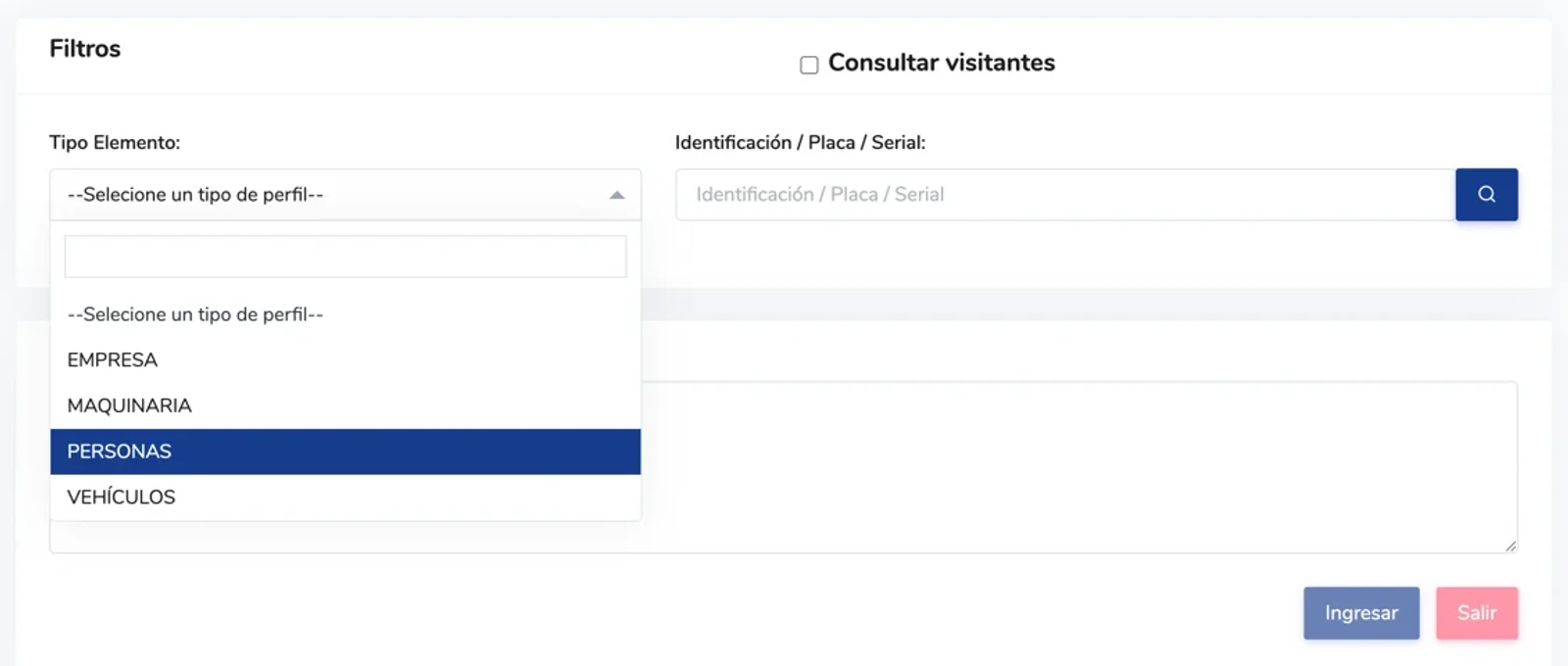
On every shift, the lookup is by ID number, license plate, serial number, or QR code from the app. The answer is cleared or not cleared, with the reason when applicable, and it doesn’t depend on the time of day.
Scenario
The 11 PM shift
Outside office hours, the gatehouse looks up the ID number of a contractor who comes in every week. The system answers with the status calculated at that moment: not cleared, because their occupational medical exam expired two days ago.
The screen shows which document is blocking entry and since when. If the operation decides to authorize entry, the record requires the name of the person authorizing it and the justification. The company already knew: the document had shown up as expiring soon during the configured alert days.
- Company
- Mining operations contractor
- Activity
- Heavy equipment operation
- Shift
- 11:00 PM to 7:00 AM
- Exception
- Entry override with responsible person and justification
Results
What changes when control no longer depends on office hours
Four concrete changes to day-to-day work in mining. You can see each one in detail on the page of the solution that carries it out.
-

The gatehouse decides on its own, at any hour
-

Expirations send alerts before they happen
-
Requirements fit what each person does
-

Contracted equipment is controlled separately from its operator
The platform
Which solutions are involved in this industry
NAVA is three solutions on the same platform. This is the role each one plays in an operation like yours.

Document requirements matrix by activity and by risk, expiration alerts, control of contracted machinery, and entry lookups on every shift.
See NAVA 360 →
Training and re-induction over WhatsApp for rotating personnel: two-minute micro-lessons, an assessment in the chat, and a certificate, with no app to install.
See NAVA Skills →
Auditors, occasional suppliers, and technical visits: self-registration through a link or QR code, pre-approval, and induction before arrival.
See NAVA ID →All three share one platform and database and are contracted separately. In an operation with rotating personnel, NAVA Skills is often activated early because the training reaches the worker’s phone.
Regulatory framework
Applicable regulations and how they translate into documents
NAVA doesn’t interpret the regulations: it manages the documents your company uses to show it has complied with them.
| Framework | What it requires | How it shows up in the document requirements matrix |
|---|---|---|
| Decree 1072 of 2015 | Obligations under the OHS (occupational health and safety) management system (SG-SST), including the hiring company’s obligations toward third parties who enter its operation | ARL, EPS, and pension enrollments, occupational medical exams, and site induction |
| Resolution 0312 of 2019 | Minimum SG-SST standards by size and risk class | Requirements differentiated by risk class and by activity |
| Resolution 4272 of 2021 | Minimum safety requirements for work at heights, more than two meters above floor level | Work-at-heights certificate as an entry-restrictive document |
| Mining regulations applicable to the operation | The framework specific to extractive activity | Configured as your own requirements, with their validity period and their approver |
Frequently asked questions
Questions about third-party control in Mining
Our operation runs 24/7. Can the gatehouse validate at night or on a holiday?
Yes. The lookup is by ID number, license plate, or serial number, or by scanning the QR code on the ID badge from the app, and the system answers with the status calculated at that moment. It doesn’t depend on someone from the office being available.
A contractor comes in twenty times a month. Do we have to review them every time?
No. Their documentation is validated once and the system recalculates the validity period. If a restrictive document expires between two shifts, the next entry is blocked, and your company knew beforehand through the expiring-soon alert.
Can we require different things depending on the activity each contractor performs?
Yes. Requirements are assigned by activity type, so two people from the same contractor company can have different document requirements matrices.
Is contracted machinery controlled the same way as people?
With the same logic, and separately. A piece of equipment is an element with its own matrix: when its inspection certificate expires, it’s disabled from operating even if its operator is up to date.
What happens if the operation needs to let in someone who isn’t up to date?
The gatehouse can record an entry override. The system requires you to state who authorized it and the justification, and the exception stays in the history and in the entry control report.
How do you keep the site induction current with so much turnover?
The induction is configured with a validity period and as restrictive. When it expires, the person is no longer cleared until they take it again and pass the assessment.
Does NAVA need a different setup for each industry?
The document requirements matrix is configured with your company’s requirements, and those requirements change from one industry to the next. The system is the same: what you configure are the documents, validity periods, approvers, and which document blocks what.
Demo
See NAVA with the requirements of your mining operation
We set up a scenario with your activities, your risk classes, and the lookup your gatehouse would do on the overnight shift. You leave with a written price proposal.
- Colombian software
- 30-day trial
- OHS validation available
- Support in Spanish